
Moving to Maryland comes with a long to-do list. Finding a place to live, setting up utilities, and figuring out the new commute all compete for attention. But there’s one task that can’t wait too long: registering the vehicle and getting Maryland plates. Maryland law requires new residents to register their vehicles within 60 days of becoming a resident. And with the state’s new “Plate Where You Live” enforcement campaign, the penalties for skipping this step are steeper than ever. Making sure you get a license plate when moving to Maryland helps you stay legal and avoid heavy fines.
Step One: Get a Maryland Safety Inspection
Most vehicles need a Maryland Safety Inspection Certificate. This inspection must be performed at an authorized Maryland inspection station. It’s required to title and register an out-of-state vehicle. However, if you’re returning to Maryland with a vehicle that was previously titled in Maryland in your name, the safety inspection isn’t required.
Don’t confuse this with emissions testing. The Vehicle Emissions Inspection Program (VEIP) test happens later. You’ll get a notice about that roughly three months after registering.
Step Two: Make an Appointment and Complete the Pre-Application
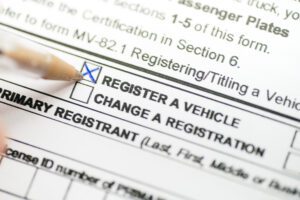
The Maryland MVA requires an appointment for title and registration services. Before the visit, complete the online pre-application. This tool helps you input your information ahead of time and generates a list of exactly what to bring.
Gather these documents before the appointment:
- Valid Maryland driver’s license or proof of Maryland residency
- Out-of-state vehicle title
- Lienholder information (if the vehicle is leased or financed)
- Maryland insurance information, including company name and policy number
- Completed Certificate of Title Application (VR-005) if the pre-application wasn’t finished online
- Check or money order for fees
Step Three: Get Maryland Insurance
Maryland requires proof of Maryland-based insurance to register a vehicle. If you’ve had trouble getting coverage elsewhere, maybe due to a past accident or a less-than-perfect record, this is where MAIF comes in.
MAIF doesn’t turn anyone away. Our agents can set up a liability policy that meets Maryland’s requirements, and we’ll provide the proof of insurance needed for registration. No judgment. No runaround.
Step Four: Visit the MVA and Pay the Fees
At the appointment, the MVA will process the title application, collect the fees, and issue new Maryland plates and registration.
Expect to pay:
- Title fee
- Registration fee (varies by vehicle type and weight)
- Excise tax (6% of the vehicle’s value, with trade-in credits available in some cases)
- Plate fees
Bring a check or money order. Some locations accept cards, but it’s best to be prepared.
Step Five: Install the Plates and Update Records
Once you have the plates, install them on the vehicle. Maryland requires both front and rear plates. Then update any records tied to the old state: insurance policies, parking permits, toll accounts, and anything else that references the previous registration.
What Happens If You Skip This?
The “Plate Where You Live” campaign is serious about enforcement. The MVA can issue a warning notice giving 60 days to register. After that, a $7-per-day civil fine kicks in for up to 60 days, a maximum of $420. If the vehicle still isn’t registered after 120 days, local jurisdictions can bring civil action, which means the car could be towed or booted.
That’s an expensive detour for something that takes a single appointment to fix.
Get Covered Before You Go
Registration requires insurance. MAIF has been helping Maryland drivers get covered since 1992, and our agents make the process simple.
Need Maryland insurance before your MVA appointment? Call MAIF today at 301.476.4887 or visit one of our Baltimore or DC area locations. Our team will set up a policy so registration goes smoothly.